
History of Elgin
A Short History of Elgin, Illinois
Long before Elgin became a city, the Fox River valley was familiar to the Potawatomi, who used the river for fishing, travel, and crossing the region.
Elgin’s modern history began in 1835, when brothers James and Hezekiah Gifford settled along the Fox River. James Gifford named the community “Elgin” after a Scottish hymn tune he had admired since childhood. The river provided waterpower for early mills, while Elgin’s location between Chicago and Galena made it a natural stopping place for travelers and trade.
The arrival of the railroad around 1850 brought rapid growth. Elgin became well known for its dairies, creameries, and butter production. In 1866, the Elgin National Watch Company began operating and soon became the city’s largest employer. Its enormous factory made Elgin watches famous throughout the country and helped transform the small river town into a major manufacturing center.
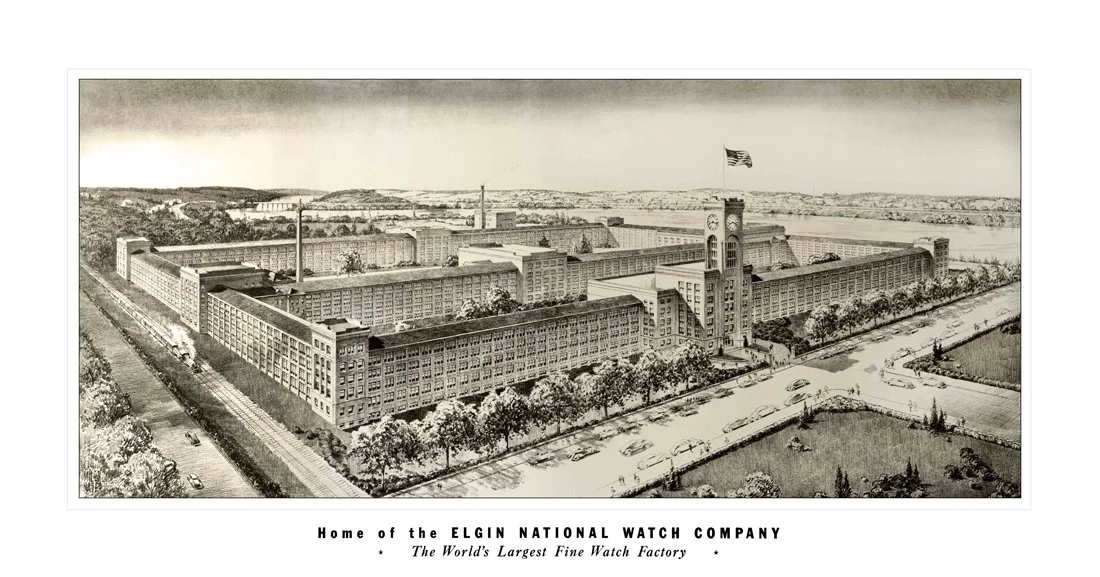
During the twentieth century, Elgin continued to grow and change as new residents, businesses, and industries arrived. Although the watch factory closed in the 1960s, its influence can still be seen in Elgin’s historic homes and neighborhoods.
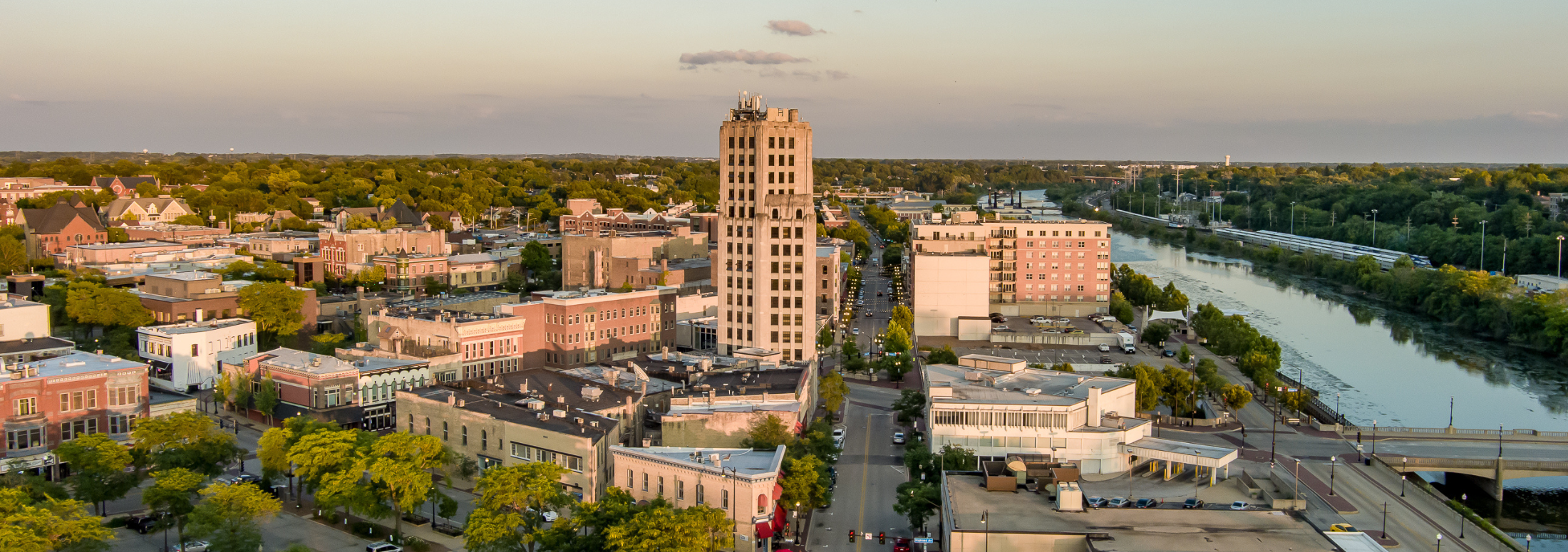
Today, Elgin is a large and diverse community that continues to preserve its historic architecture while renewing its downtown and riverfront.